Tower rush is the name we give to the way we plan tall buildings. The goal is a frame that climbs fast and steadily, and the rule is simple: rush the planning, never the concrete.
The method
The Tower rush method
How we plan a high-rise so it can climb in a steady rhythm: six levels of thinking, from ground truth to handover.
Six levels
Ground truth
Surveys, soil and access come first. A tower that climbs fast is one whose crane bases, deliveries and pump positions were fixed before the first pile.
Foundations
Piles and the raft are the slowest part of the job and the one that cannot be rushed. Everything above depends on their tolerances.
Core first
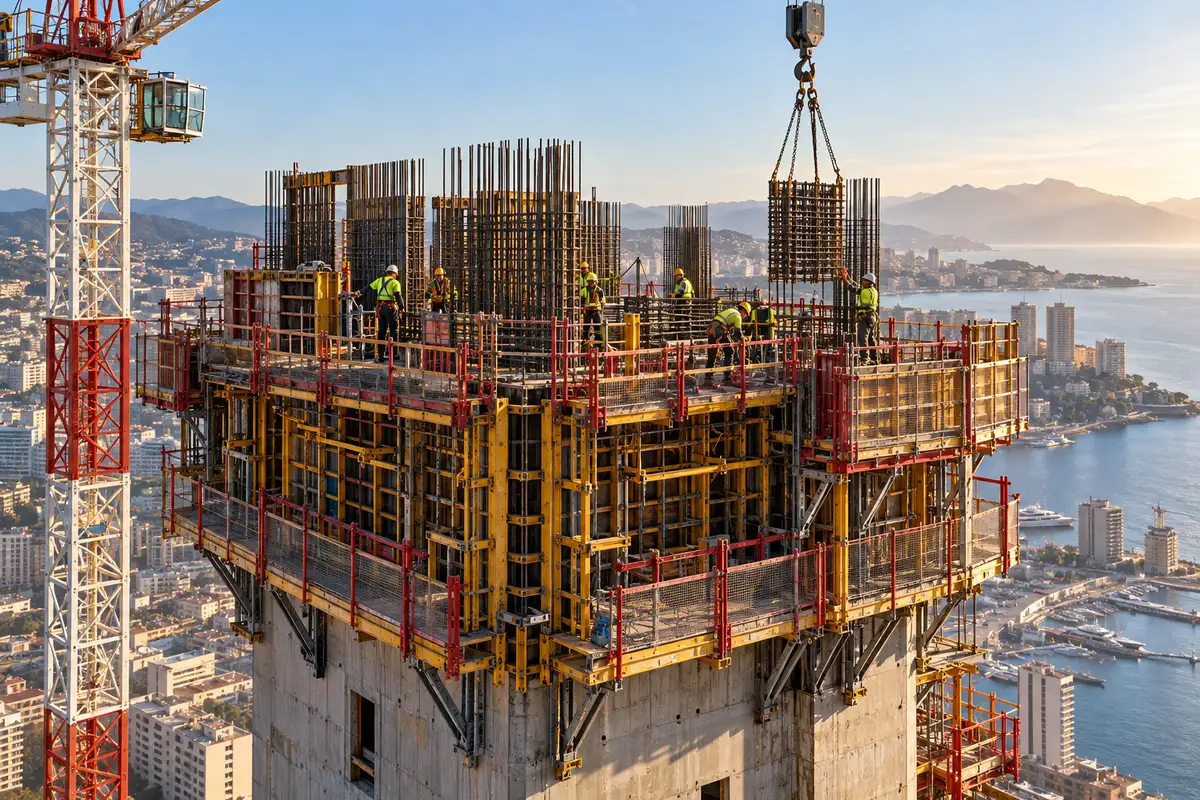
The concrete core leads the building, climbing on its own formwork a few levels ahead of the slabs and giving the frame something to hold on to.
The floor cycle
Once the core is ahead, the frame follows in a repeating cycle: strike, lift, fix, pour, check. This rhythm is the real tower rush.
Envelope
Facade units close the building a few floors behind the frame, so finishing trades can start inside while the top is still rising.
Fit-out and handover
Services, interiors and testing turn a structure into a building. A calm finish is the reward for a well-planned rush.
What makes a good tower rush
- A core that leads the floors by a few levels and never waits for them.
- Floors that repeat, so crews learn the cycle.
- Cranes, hoists and pumps chosen from a count of real lifts.
- Deliveries booked to the hour.
- Tests before every load, every time.
Read more
About the images
Images marked as AI-generated are concept visualisations. The diagrams are our own concept drawings.