
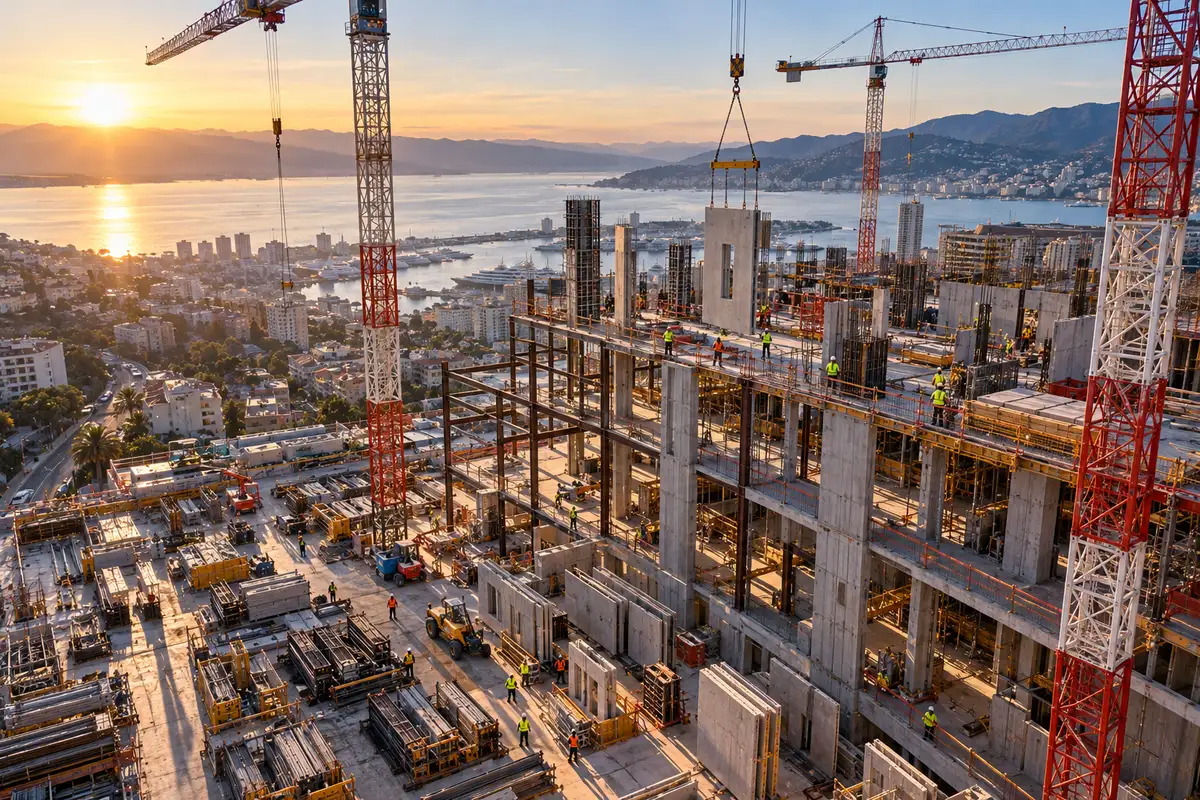
On site, people talk about a tower rush when a building starts gaining a floor every few days. From the street it looks like a sprint. From the inside it is the opposite: a routine so well rehearsed that nothing surprises anyone.
Tower rush notes
What a tower rush really means
Why the fastest part of a high-rise is the part you hardly notice, and where the real time is won or lost.
The rush is decided early
The pace of the frame is set long before the frame exists. Crane positions, the reach of the concrete pump, the size of the hoists and the route of every delivery decide how many floors a crew can realistically build in a month. Change any of them halfway and the rhythm breaks.
Repetition beats heroics
A floor that repeats the one below it is faster to build than a clever one. Standard formwork, the same reinforcement cages and the same sequence of trades let crews settle into a cycle. The best tower rushes are almost boring to watch.
What a rush must never touch
- Concrete strength before loading or striking.
- Temporary works checks on formwork and edge protection.
- Weather limits for lifting at height.
- Rest for the people doing the work.
Rush the planning, never the concrete
That is the line we keep coming back to. Every hour spent planning logistics saves days on the frame. Every hour saved by pouring too early, or loading too soon, is borrowed against the safety of the building.