
Every floor of a concrete tower ends with a pour. Getting fresh concrete from a mixer truck at street level to a deck far above, and placing it well, is one of the quiet skills behind any tower rush.
Methods
Pouring at height
Concrete pumps, night pours and the checks that decide when a new floor is strong enough to carry the next one.
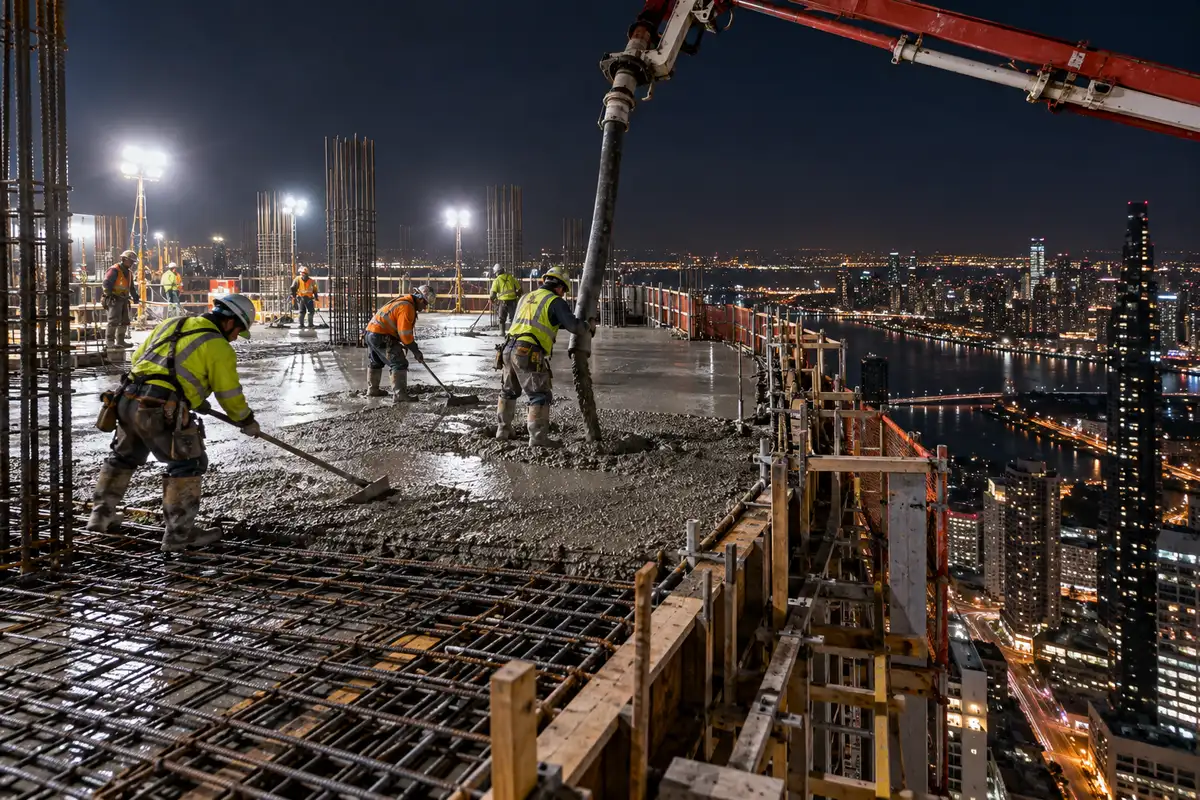
Getting concrete up
On tall buildings concrete usually travels by pump, through a pipeline fixed to the core and out through a placing boom on the working deck. The mix is designed for the journey: workable enough to pump, strong enough once it sets.
Why pours often happen at night
Cities are quieter at night, so mixer trucks arrive on time, and cooler temperatures can help the concrete cure evenly. Night work needs good lighting, noise limits agreed with neighbours and crews rested for it.
A pour, step by step
Inspect
Reinforcement, embedded items and formwork are checked and signed off before any concrete arrives.
Place
Concrete is pumped and spread in a planned sequence so no part sets before the next arrives.
Compact and finish
Vibrators remove trapped air and the surface is levelled to the required finish.
Cure
The slab is protected from drying too quickly while it gains strength.
Test
Samples taken during the pour are tested before forms are struck or loads applied.
The one thing not to rush
The next floor can only go up when the last one is strong enough. That moment is decided by tests, not by the programme. It is the clearest example of our rule: rush the planning, never the concrete.