
Every piece of a tall building, from a rebar bundle to a facade unit, has to be lifted. On most sites the crane hook is the scarcest resource, and planning around it is half the job.
Logistics
Cranes, hoists and the logistics of height
A tower rush is only as fast as the hook. How lifting, deliveries and storage are planned on tight high-rise sites.
Count the lifts
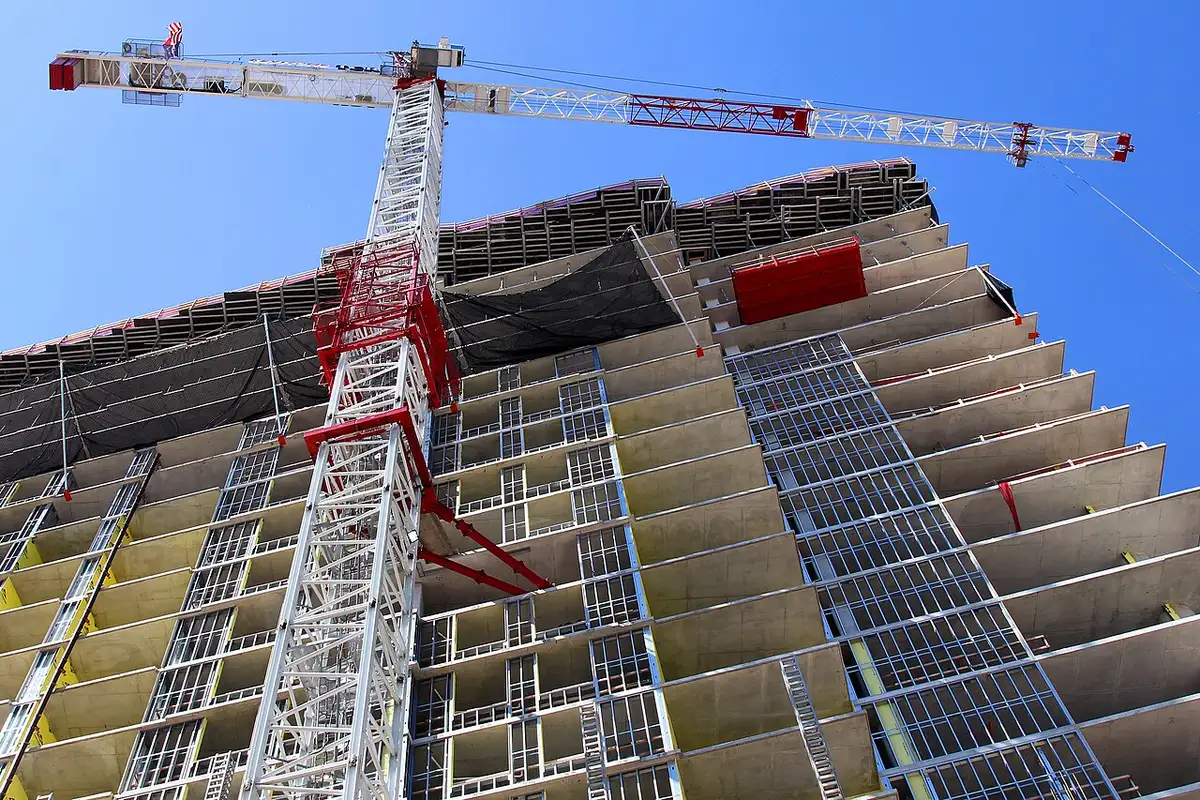
Before choosing cranes we list what has to go up and how often: formwork, reinforcement, precast parts, facade units, plant. That count, set against realistic lifting hours once wind and weather are taken off, shows how many cranes the job needs and where they must stand.
Take loads off the crane
Concrete goes up by pump, people and small materials by hoist, and the climbing formwork moves on its own jacks. Each of these frees the hook for the heavy, awkward lifts only a crane can do.
Deliver to the hour
City sites rarely have room to store materials. Deliveries are booked to a fixed time and go straight from the lorry to the floor where they are needed. A late lorry costs crane time; an early one blocks the street.
Plan the way down too
Cranes have to be dismantled at the end, often by smaller cranes on the roof. Thinking about that on day one avoids nasty surprises when the tower is finished.